
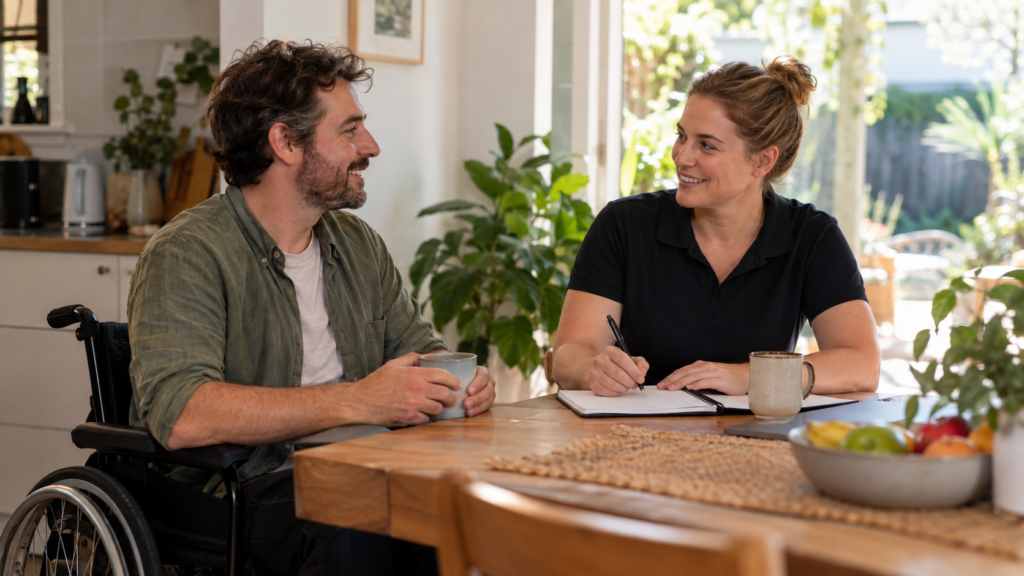
Your first mobile occupational therapy visit is a relaxed, getting-to-know-you session in your own home. There is no clinic to travel to and nothing you need to perform. The occupational therapist wants to see how everyday life actually works for you, so they can suggest practical changes that fit your real routines. A little preparation helps, but it does not need to be elaborate.
Here is what usually happens at a first visit, what to have ready, and how to make the session comfortable, whether the participant is you, your child or a family member.
What happens at a first visit
Because mobile occupational therapy happens in your own space, the therapist can see your real environment rather than hearing about it. A first visit is generally about building rapport and gathering information, not about fixing anything on day one.
Depending on the participant’s age, goals and communication style, the therapist will usually start with a friendly chat about what is working well and what feels hard day to day. They might ask about morning and evening routines, mealtimes, getting around the house, and community activities. They will often observe how someone moves between rooms, uses the kitchen or bathroom, or manages steps and entryways, and they will want to hear goals described in the participant’s own words. Towards the end, they will talk through next steps, including how often visits might happen and what a therapy plan could look like.
Nothing is rushed. If the participant needs breaks, wants a support person present, or would rather start with a shorter session, that is completely normal and worth mentioning when you book.
Preparing your home without stressing about it
You do not need a spotless house or special equipment. The therapist is there to understand real life, not to inspect it. That said, a few small things make the visit smoother:
- Choose a comfortable spot with a chair and table if possible, somewhere quiet enough to talk.
- If pets are excitable, consider having them settled elsewhere during the visit.
- Clear a path to the areas you would like the therapist to see, such as the bathroom, bedroom or backyard.
- Have daily items handy. Cutlery, writing tools, mobility aids or a child’s favourite toys can be genuinely useful to look at together.
- Let the therapist know about gates, secure parking, intercoms or stairs so they can plan their arrival.
Information worth having ready
You do not need paperwork perfection. A rough collection of contact details and preferred communication needs is a good start. It also helps to have a short list of current supports or therapies, if any (for example, physiotherapy or speech pathology; you can read more about our mobile physiotherapy if that is relevant), plus a summary-level note of any medications or health conditions the therapist should know about.
Write down goals or concerns in your own words, even as dot points on your phone. And if decisions or funding arrangements are managed by someone other than the participant, it helps for that person to be contactable on the day.
If you are an NDIS participant, it is worth checking with your plan manager or support coordinator about how your plan funds therapy supports before your first session, so there are no surprises. Every plan is different, and your plan manager is the right person to confirm what applies to you.
Tips for children and adults alike
For children, let your child know a friendly visitor is coming and what they might do together. Have favourite toys, snacks or comfort items nearby, and choose a time of day when your child is usually at their best, not straight after a big day at school.
For adults, jot down your top two or three goals beforehand so you do not go blank on the day. Wear or have available the clothing and aids you would normally use, and remember it is fine to have a family member, carer or advocate with you.
Questions you might like to ask
A first visit is a two-way conversation, and it is worth coming with a few questions of your own:
- How do you usually work with participants and families between visits?
- What might a typical therapy plan involve for someone with goals like mine?
- How will we review progress together?
- How do you coordinate with my other supports, like my support coordinator or other therapists?
There are no silly questions. If something is unclear, ask.
Common worries, answered
Do I need to clean my house before the visit? No. Occupational therapists expect to see homes as they are, and that is actually helpful for understanding daily routines. Just make sure there is a safe, comfortable place to sit and talk.
Can I have a support person with me? Yes. Participants are welcome to have a family member, carer, advocate or support worker present. Mention it when booking so the therapist can plan the session accordingly.
What if I do not know what my goals are yet? That is very common at a first visit. Part of the occupational therapist’s role is to help you explore and shape goals over the first few sessions, so you do not need to arrive with a finished list.
Booking your first visit
If you are ready to get started, learn more on our occupational therapy page or head to our booking page to arrange your first mobile occupational therapy visit. You can also call us on 0410 268 144 or email admin@progressiverespite.com.au.
This article is general information only and is not a substitute for individualised advice from a qualified health professional.
Book now: call 0410 268 144 or email admin@progressiverespite.com.au to arrange your first visit.