
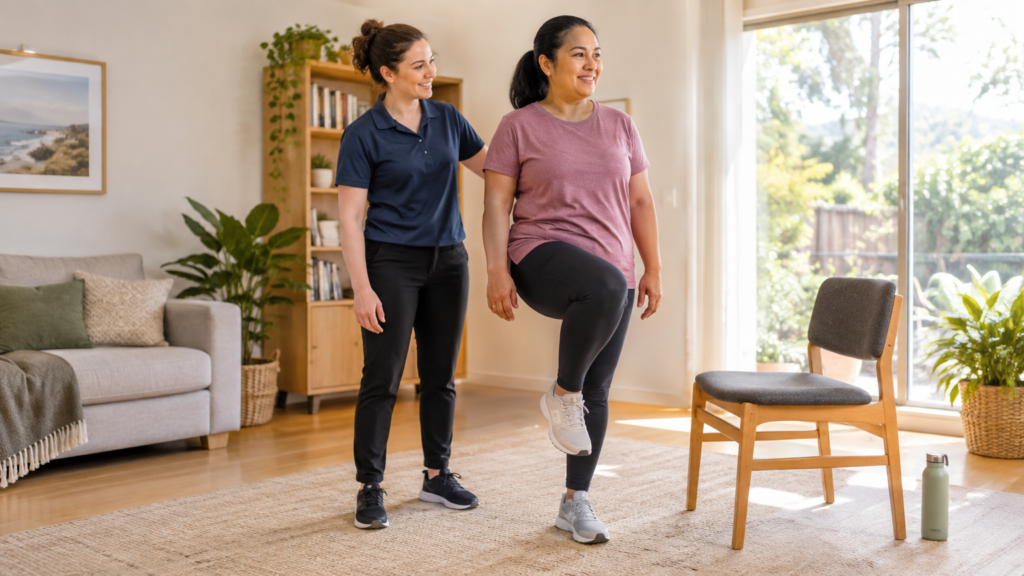
For a mobile physiotherapy appointment, the essentials are simple: a clear space to move safely, comfortable clothing, any relevant reports or equipment, and a short list of your goals and questions. Because the physiotherapist comes to you, a little preparation at home helps the session start on time and focus on what matters most.
This guide is general information for NDIS participants, families and support coordinators. It is not individual medical advice, and your treating physiotherapist will tailor everything to your situation.
Why preparation matters for a home visit
Mobile physiotherapy brings assessment and therapy into your own environment, which can be more comfortable and more practical than travelling to a clinic. It also means the physiotherapist can see how you move in the spaces you actually use every day.
A few minutes of preparation helps in three ways:
- More session time on therapy. When space, paperwork and questions are ready, less time is spent on setup.
- Safer movement. A clear, well-lit area reduces trip hazards during assessments and exercises.
- Better follow-through. Having family members or support workers available means everyone understands the plan between visits.
Your practical checklist
Space and safety
- Clear a small area where you can lie down, stand and take a few steps safely.
- Move loose rugs, cords and clutter out of the main walking path.
- Make sure the room is well lit and at a comfortable temperature.
- Have a sturdy chair nearby—many exercises can be done seated if needed.
What to wear
- Comfortable, loose clothing you can move in, such as shorts, leggings or a t-shirt.
- Supportive, enclosed shoes if you have them, or bare feet if that is more suitable indoors.
- Layers you can add or remove, depending on the activity.
Documents and equipment
- Any relevant reports, letters or previous exercise programs, if you have them.
- Your NDIS plan details or plan manager contact information, if the physiotherapist or admin team has asked for them.
- Equipment you already use, such as walkers, braces, resistance bands or standing frames.
- A list of current medications is often helpful for your own reference, but you do not need to hand over prescriptions—your physiotherapist will tell you what information they need.
People and communication
- Let household members know the visit time so pets and interruptions are managed.
- Invite a family member, carer or support worker to join part of the session if you would like them to learn the exercises.
- Write down your top two or three goals—for example, walking to the letterbox, transferring more safely, or managing pain during daily tasks.
- Note any questions you want to ask, and mention any changes since your last visit, such as new pain, falls or equipment changes.
What you do not need to provide
It is just as useful to know what is not required. You generally do not need to:
- Buy special equipment before the first visit—your physiotherapist will suggest options suited to your home and budget if needed.
- Prepare a formal medical history document; a conversation is usually enough to start.
- Rearrange your whole home; a small clear space is enough for most sessions.
- Have answers ready for everything—”I’m not sure” is a perfectly fine response, and your physiotherapist will guide the conversation.
Tips for a smooth first visit
If this is your first mobile physiotherapy appointment, a few extra touches can help:
- Choose a good time of day. Pick a time when you typically have the most energy and fewest other commitments.
- Plan around parking and access. If there is anything the physiotherapist should know about parking, gate codes, stairs or intercoms, mention it when booking.
- Keep a water bottle handy. Movement sessions can be thirsty work.
- Expect some questions first. The early part of a first appointment usually involves conversation about your history, goals and home environment before any hands-on assessment.
For a closer look at what physiotherapy involves and how mobile sessions work, see our mobile physiotherapy service. If you are also preparing for other disciplines at home, our guide to your occupational therapy support may be helpful.
Frequently asked questions
Do I need a treatment table or special equipment at home?
No. Mobile physiotherapists work with what you have—a bed, a couch, a sturdy chair and clear floor space are usually enough. If specific equipment would help your program, your physiotherapist will discuss options with you rather than expecting you to buy things in advance.
Can my support worker or family member stay in the room?
Yes, absolutely. Many participants prefer to have someone present, and it can be valuable for carers to learn exercises or positioning so they can support you between visits. Just let your physiotherapist know who will be there.
What if I don’t have a clear space or my home is small?
That is very common and not a problem. Mention it when you book, and the physiotherapist can plan around the space available. Some sessions can also happen seated, outdoors, or in a community setting such as a local park or pool, depending on your goals.
Ready to book a mobile physiotherapy visit?
Progressive Allied Health & Disability Support delivers mobile and telehealth physiotherapy across the Gold Coast, Brisbane, Logan, Toowoomba, Ipswich and Northern NSW. To arrange a visit or ask a question, call 0410 268 144, email admin@progressiverespite.com.au, or head to our booking page to get started.