
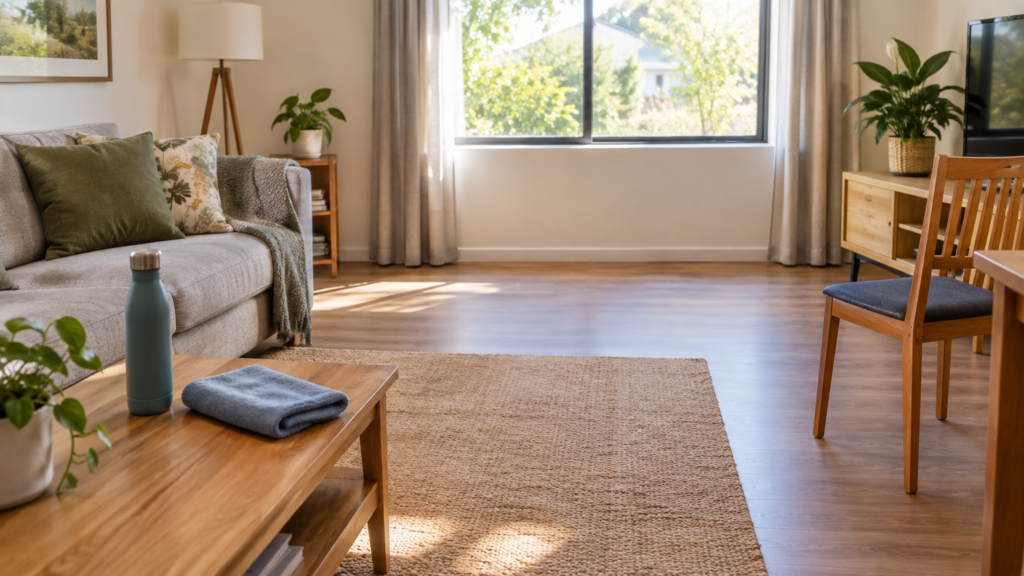
The short answer: you don’t need much. A cleared patch of floor, a sturdy chair, good light and a bit of privacy will cover most mobile allied health appointments. The therapist brings the equipment; your job is simply to make the space workable and comfortable.
That said, a little preparation goes a long way. Here are the questions families most often ask us before a first visit, answered plainly.
How much room does the therapist actually need?
Less than most people expect. For a physiotherapy or exercise physiology session, a space roughly the size of two or three yoga mats is usually enough, somewhere the person can lie down, stand and take a few steps without dodging furniture. For occupational therapy, the therapist may want to see the rooms where everyday tasks happen, so a kitchen bench and bathroom doorway matter more than an empty lounge room.
Speech pathology sessions often need the least space of all: a quiet table where you can both sit and hear each other properly.
If you’re unsure whether your home suits, mention it when you book. We can talk through what the session will involve and whether another spot, like a covered patio or a local park, might work better.
What should I do before the therapist arrives?
A few small jobs the day before make the visit calmer for everyone:
- Clear a walkway from the front door to the space you’ll use, including any steps or ramps.
- Move fragile or precious items out of the working area, especially if balance or movement practice is on the agenda.
- Have any relevant paperwork handy, such as reports, a referral or notes from other therapists.
- Pop pets somewhere they’re comfortable but out of the way.
- Open blinds or curtains so the space is well lit.
You don’t need to deep-clean the house. Therapists visit real homes every day and nobody is judging your laundry pile.
Does the person attending need to be in the living room?
Not necessarily, and this is worth thinking about ahead of time. Some people are more relaxed in their own bedroom or a quiet corner than in the middle of the family lounge. Others do better with a familiar sibling or support worker nearby.
Say your daughter finds it easier to concentrate away from the television. Setting her up at the kitchen table with a window to look out of might work far better than clearing the lounge room. There’s no single right answer, and it’s fine to tell the therapist what usually helps.
Privacy is the other consideration. Some conversations, particularly around goals, personal care or sensitive history, are easier without an audience. If that’s likely, having another room available for a chat helps.
What about parking, access and the front door?
These are the practical things that quietly eat into appointment time. If parking near your place is tricky, let us know whether there’s a driveway, a visitor spot or a particular street that works. If access involves a gate code, a lift or a side door, a quick heads-up means the therapist isn’t hunting around at the start of the visit.
If the person has limited mobility, think about the path from the car to the working space. A therapist may need to bring equipment in, so knowing whether there are stairs, a narrow hallway or a steep driveway helps them plan.
What if my home is small, shared or a rental?
A small home is not a problem. Plenty of good sessions happen in unit lounges, on verandahs and at kitchen tables. If space is genuinely tight, the therapist can adapt, focusing on seated exercises, functional tasks in the kitchen or a session split between indoors and a nearby outdoor spot.
For rentals and shared accommodation, nothing about a standard appointment should cause concern. No furniture gets moved permanently, no equipment is installed and nothing needs the owner’s permission. If a session does involve assessing the home for equipment or modifications, that’s a conversation and a report, not a renovation.
Can telehealth replace the home visit sometimes?
Often, yes. We deliver appointments by telehealth as well as in person, and for some goals, like speech practice, check-ins between face-to-face sessions or coaching a parent through a program, a video call works well. It also means fewer setups at your end: a device propped at eye level, a chair and a quiet room will do.
Many families use a mix. A mobile occupational therapy assessment at home, then telehealth follow-ups, is a common pattern. Your therapist will talk through what suits the goals, not the other way around.
Do I need to stay for the whole session?
For children and for anyone who’d like an advocate present, yes, someone should be home. For adults who prefer independence, it depends on the person and the goals. It’s worth deciding before the appointment rather than in the moment, and telling the therapist your preference at the start.
Whoever stays can make themselves useful by having a water bottle, any regular aids or equipment, and a couple of honest observations ready. You know the person better than any report does.
A quick word on funding
Plans, goals and funding arrangements differ from person to person, so it’s always worth checking with your plan manager or support coordinator about how mobile and telehealth appointments fit your situation. Progressive is not a registered NDIS provider, which affects how some participants can use their funding with us, so ask us directly and we’ll explain it clearly before you commit to anything.
If you’d like help working out what a session at your place would involve, mobile physiotherapy and our other allied health pages describe what each discipline typically does in a home visit. Or simply Book Now and we’ll talk it through.