
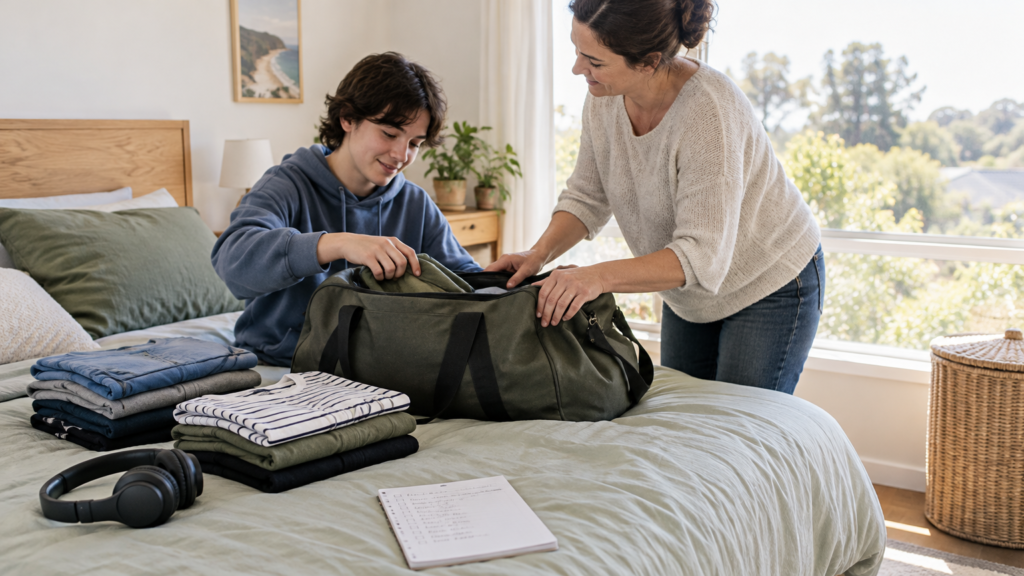
Packing for short-term respite works best when the participant leads it, with family or a support person helping where needed. Bring the everyday essentials, the comfort items that make an unfamiliar place feel familiar, and enough written detail about routines that support workers can keep things running the way they do at home. What you leave out matters too: you don’t need to pack the whole house.
What should go in the bag?
Start with the boring stuff, because it’s the stuff that gets forgotten. For a stay of a few days, that usually means:
- Enough clothes for the stay plus a spare day, including weather gear (a rain jacket, a warmer layer) and comfortable shoes
- Toiletries, incontinence products if used, and any glasses, hearing aids or mobility aids with their chargers
- Medications in their original packaging, with clear written instructions about doses and timing
- ID, Medicare details, and contact numbers for the participant’s GP and key supports
- A phone or device charger, and headphones if noise is an issue
Then add the things that make the stay feel like theirs. A favourite doona cover, the podcast playlist, the specific mug that works with a particular grip. These items are small, but they do a lot of the work of making an unfamiliar bedroom feel sleepable.
How much should the participant decide?
As much as possible. Packing is a useful skill-building moment: choosing outfits, checking a list, deciding what matters enough to bring. Even when someone needs hands-on help, they can still make the calls. Say your daughter always packs three books even though she’ll read one. Three books go in the bag. The stay is her stay.
A practical approach is to sit together with the bag and work through a simple list, with the participant ticking things off or physically handing items over. Where decision-making is shared, talk through the trade-offs out loud rather than deciding quietly. It’s also worth asking what they want packed where. Some people like their comfort items at the top of the bag, not buried.
What routine information should we leave behind?
This is the part families most often underdo. Support workers can follow a routine brilliantly, but only if they know it. A one or two page handover, written plainly, saves everyone guessing. Useful things to include:
- Morning and evening routines in the order they actually happen, including the quirks (the specific order of teeth-then-hair, the night light that stays on)
- Medication details, including what each one is for and anything that shouldn’t be taken together
- Food preferences, textures that don’t work, and any mealtime support needed
- Communication notes: how the person says yes, no, and needs a break, especially if speech isn’t the main channel
- Sensory notes: sounds, textures or situations that cause distress, and what helps
- What a good day looks like, and what a wobbly one looks like early on
If the participant uses a communication device or visual schedule, it comes along, and the handover should say how it’s used. If you’d like help thinking through routines and daily skills before a stay, our mobile occupational therapy team works with participants on exactly this kind of everyday planning.
What’s better left at home?
A few categories cause avoidable stress. Valuables and sentimental items that would be devastating to lose are usually better at home, unless they’re needed for comfort, in which case flag them in the handover. Large amounts of spending money can stay home too; a small amount for an outing is plenty. Anything that needs special storage or handling you don’t want to explain over the phone is worth reconsidering.
It’s also fine to leave the over-packing instinct behind. Respite providers can nearly always sort a forgotten toothbrush. What they can’t substitute is the participant’s own routine and preferences, which is why the handover notes matter more than a perfectly full suitcase.
How do we prepare in the days before the stay?
A short runway helps. A week or so out, confirm the dates, arrival time and who’s dropping off, and send the handover notes through so staff can read them before day one. A few days out, do the washing and the actual packing, and check medications are filled for the whole stay plus a buffer. The day before, pack the comfort items last so they’re available at home until the final moment, and talk through the plan with the participant in concrete terms: who’s driving, when they’ll arrive, what the first hour will look like.
For many participants, the drop-off itself goes better when they’ve seen the place or at least photos of it beforehand. If that wasn’t part of your planning, our article on questions to ask when planning individual short-term respite covers what to sort out before booking.
What should we sort out on arrival day?
Keep it unhurried. Arrive with the handover notes printed or on a phone, walk through medications with the support worker on shift, and show where the comfort items are packed. Hand over the communication notes in person if you can, because ten minutes of “this is what a hard moment looks like for him” is worth more than any written page. Then say goodbye clearly and leave on time; long, drifting farewells tend to be harder for everyone than a warm, definite one.
Agree beforehand how you’ll check in, and how often. Some participants want a daily call, others find them disruptive. That preference belongs to the participant, and it’s worth deciding together before the first night.
If you’re arranging individual short-term respite and want to talk through what a stay could look like, we’d be happy to help. Book Now or call 0410 268 144.