Planning community participation around personal interests means starting with what the person already enjoys (hobbies, music, animals, sport, craft, gaming, food) and using those interests as the foundation for social and skill-building supports. Interests give participation a purpose, which makes it more motivating, more sustainable and far more likely to lead to real connection. Every person’s goals and funding are different, so what follows is general information rather than advice about any individual plan.
Why interests should lead the plan
Support built around a real interest tends to last. When someone joins an activity because they love it, not because it was simply available, they’re more engaged, more willing to practise new skills and more likely to build relationships with people who share the same enthusiasm.
Interest-led participation also supports other goals naturally. A person who loves animals might build communication skills at a pet-friendly park meet-up. Someone keen on cooking might work on budgeting, planning and fine motor skills in a community kitchen class. The interest is the anchor; the goals grow around it.
Starting with the person
Before booking anything, spend time mapping what matters to the participant. For families and support coordinators, this works best as a conversation over a cuppa, not a form.
- What does the person choose to do in free time, and what topics come up most in conversation?
- Is there something they loved before life got busy, or before an injury or diagnosis?
- Do they prefer crowds or quiet, loud venues or calm ones, mornings or afternoons?
- Which environments, textures, noise levels and paces feel good, and which feel overwhelming?
- Do they connect best one-to-one, in small groups, or alongside others without much interaction?
- Is there something they’ve always wanted to try, like surfing, art or volunteering?
Even three or four strong interest themes are enough to start planning around. You don’t need a complete picture before taking the first step.
Turning interests into real community options
Once you have a shortlist, brainstorm where those interests already exist in the community. Most towns have more options than people realise, from libraries and pools to markets and community gardens.
Match interests to settings
- Creative interests like art, music or craft suit community classes, libraries, makerspaces and choirs.
- Active interests like walking, swimming or sport suit inclusive sports clubs, walking groups and park programs.
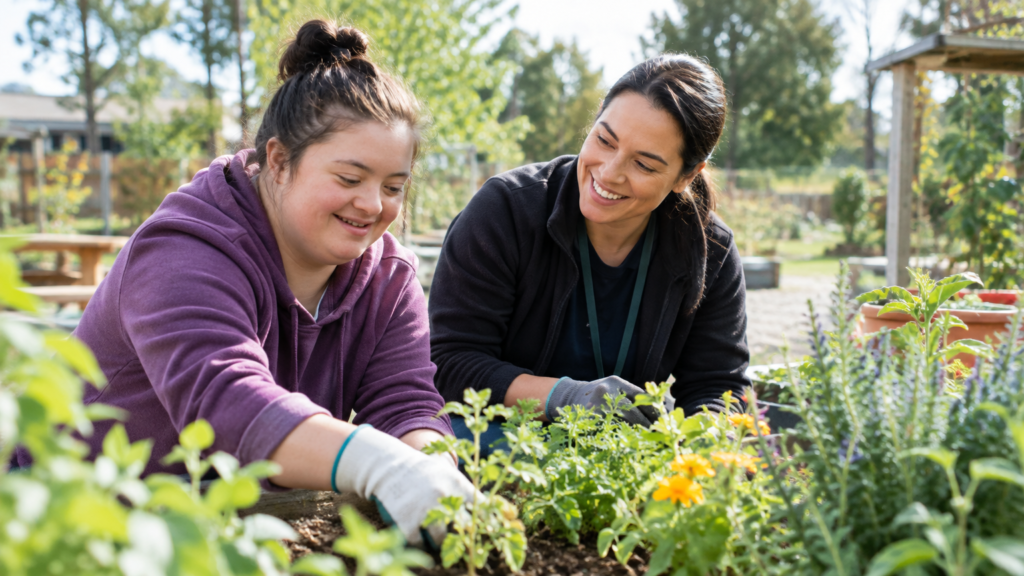
- Nature and animal lovers might enjoy community gardens, parks, beach outings or animal shelters.
- Food and cooking can lead to markets, community kitchens and cooking classes.
- Games and technology suit gaming groups, board game cafés and coding clubs.
- A wish to help others can become a volunteering role matched to interests and support needs.
Before committing, visit once if you can. Check accessibility, noise levels, costs and whether the group welcomes newcomers warmly. A trial visit can prevent a discouraging first experience, and a bad fit early on can put someone off trying again for months.
Where support workers and allied health fit in
A consistent support worker can make the difference between attending an activity and actually taking part in it. One-to-one community participation support, delivered by a worker who knows the participant’s interests, routines and communication style, helps with transport, social confidence, skill practice and staying engaged on harder days.
Allied health can play a practical role too. An occupational therapist can help think through sensory and environmental fit, or strategies for participating more independently. A speech pathologist can support communication goals within social settings. The key is that therapy supports the participation goal, not the other way around.
Progressive offers one-to-one community participation support built around each participant’s goals and routines, delivered by a consistent team through mobile and telehealth visits.
Keeping the plan flexible
Interests change, and that’s healthy. Build in a check-in every few months to ask whether the participant is still enjoying the activity or just attending, whether they’re doing more independently than when they started, whether new interests have emerged, and whether the timing, location or level of support is still working.
It’s completely fine to retire an activity that’s no longer a good fit. Participation should grow with the person, not become another obligation on the calendar.
Common questions
How many activities should we start with?
Start small. One or two well-matched activities beat a crowded schedule that leads to fatigue or overwhelm. You can add more once something is working well.
What if the participant doesn’t seem interested in anything?
Keep exploring gently. Interests can be hard to name in the abstract, so try offering short, low-pressure experiences (a market visit, a library browse, a beach walk) and notice what sparks engagement. What someone watches, listens to or talks about is often the best clue.
Can support workers help build skills during community activities?
Yes. Community participation support can include practising everyday skills like communication, money handling and travel confidence within real settings, at a pace that suits the participant.
If you’d like help planning participation around what matters most, Book Now or call 0410 268 144.