
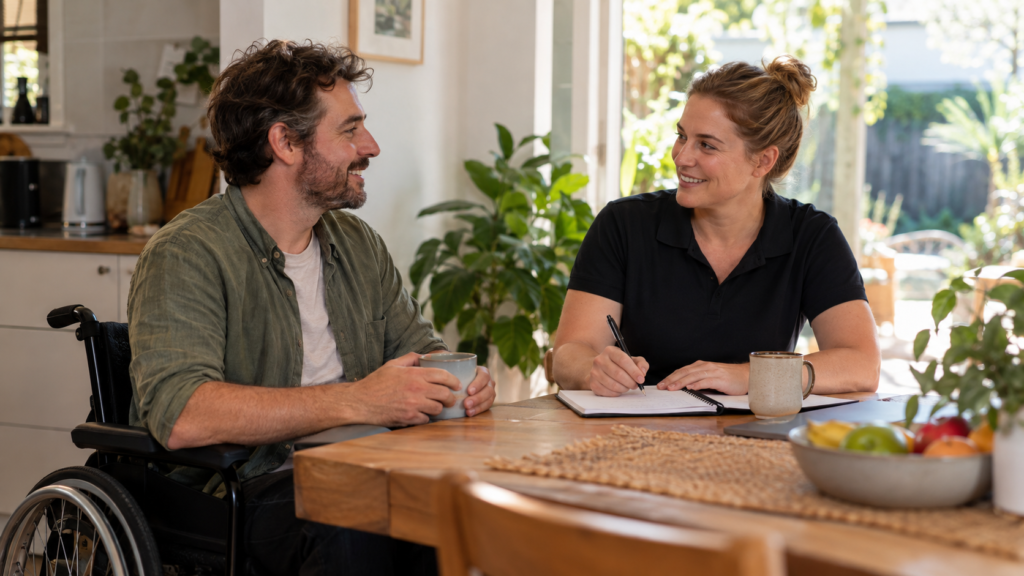
Your first mobile occupational therapy (OT) visit is simply a relaxed, getting-to-know-you session in your own home or another familiar place. There is no clinic to travel to and nothing you need to “perform” — the occupational therapist will want to see how everyday life actually works for you, so they can suggest practical changes that fit your real routines. A little preparation helps, but it doesn’t need to be elaborate.
This guide walks you through what usually happens at a first visit, what to have ready, and how to make the session comfortable for the participant — whether that’s you, your child or a family member.
What Happens at a First Mobile OT Visit
Because mobile occupational therapy happens in your own space, the therapist can see your real environment rather than hearing about it. A first visit is generally about building rapport and gathering information, not about “fixing” anything on day one.
Depending on the participant’s age, goals and communication style, a first visit may include:
- A friendly introduction and a chat about what’s working well and what feels hard day to day.
- Getting to know routines — morning and evening routines, mealtimes, mobility around the home, and community activities.
- Observing the environment, such as how someone moves between rooms, uses the kitchen or bathroom, or manages stairs and entryways.
- Discussing goals — what the participant and family want to achieve, in their own words.
- Planning next steps, including how often visits might happen and what a therapy plan could look like.
Nothing is rushed. If the participant needs breaks, wants a support person present, or would rather start with a shorter session, that’s completely normal and worth mentioning when you book.
How to Prepare Your Home (Without Stressing About It)
You don’t need a spotless house or special equipment. The therapist is there to understand real life, not to inspect it. That said, a few small things can make the visit smoother:
- Choose a comfortable spot with a chair and table if possible — somewhere quiet enough to talk.
- Keep pets in mind. If pets are excitable, consider having them settled elsewhere during the visit.
- Clear a path to the areas you’d like the therapist to see, such as the bathroom, bedroom or backyard, if relevant.
- Have daily items handy — anything used in daily routines (cutlery, writing tools, mobility aids, favourite toys for children) can be genuinely useful to look at together.
- Plan for parking or access. Let the therapist know about gates, secure parking, intercoms or stairs so they can plan their arrival.
Information Worth Having Ready
You don’t need paperwork perfection — a rough collection of the following is plenty:
- Contact details and any preferred communication needs.
- A short list of current supports or therapies, if any (for example, physiotherapy or speech pathology — you can read more about our mobile physiotherapy if that’s relevant).
- Medications or health conditions the therapist should be aware of, at a summary level.
- Goals or concerns written down in your own words — even dot points on your phone.
- Who makes decisions or manages funding arrangements, if that’s someone other than the participant.
If you’re an NDIS participant, it’s worth checking with your plan manager or support coordinator about how your plan funds therapy supports before your first session, so there are no surprises. Every plan is different, and your plan manager is the best person to confirm what applies to you.
Tips for Children and Adults Alike
For children
- Let your child know a friendly visitor is coming and what they might do together.
- Have favourite toys, snacks or comfort items nearby.
- Choose a time of day when your child is usually at their best — not straight after a big day at school.
For adults
- Jot down your top two or three goals beforehand so you don’t go blank on the day.
- Wear or have available the clothing and aids you’d normally use day to day.
- It’s fine to have a family member, carer or advocate with you.
Questions You Might Like to Ask
A first visit is a two-way conversation. Useful questions include:
- How do you usually work with participants and families between visits?
- What might a typical therapy plan involve for someone with goals like mine?
- How will we review progress together?
- How do you coordinate with my other supports, like my support coordinator or other therapists?
There are no silly questions — if something is unclear, ask.
Frequently Asked Questions
Do I need to clean my house before the OT visit?
No. Occupational therapists expect to see homes as they genuinely are — that’s actually helpful for understanding daily routines. Just make sure there’s a safe, comfortable place to sit and talk.
Can I have a support person with me during the visit?
Absolutely. Participants are welcome to have a family member, carer, advocate or support worker present. Just mention it when booking so the therapist can plan the session accordingly.
What if I don’t know what my goals are yet?
That’s very common, especially at a first visit. Part of the occupational therapist’s role is to help you explore and shape goals over the first few sessions — you don’t need to arrive with a finished list.
Ready to Book Your First Visit?
If you’re ready to get started, our team provides mobile and telehealth occupational therapy across the Gold Coast, Brisbane, Logan, Toowoomba, Ipswich and Northern NSW. Learn more on our occupational therapy page or head straight to our booking page to arrange your first visit. You can also call us on 0410 268 144 or email admin@progressiverespite.com.au.
This article is general information only and is not a substitute for individualised advice from a qualified health professional.