
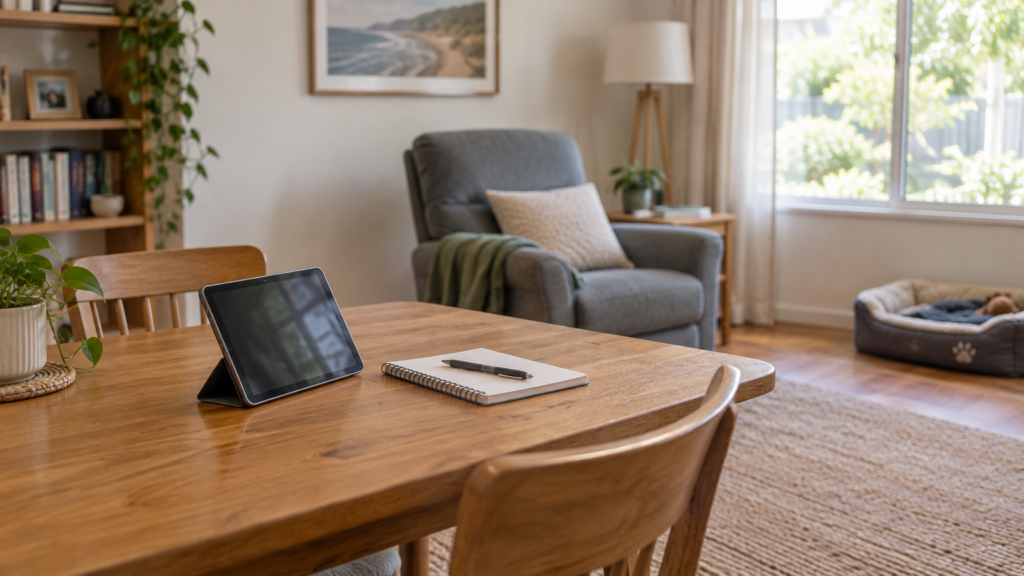
A first mobile speech pathology visit is mostly about getting to know each other. The speech pathologist will want to see how communication happens in real life, at your place, so there is no need to tidy the house to hospital standards or perform for anyone. A bit of preparation around space, paperwork and goals makes the session smoother, but none of it needs to be perfect.
What actually happens on the first visit
Expect a lot of talking, and not all of it from the speech pathologist. They will ask about history, what communication looks like day to day, what has been tried before and what matters most to the participant. Depending on the person’s age and goals, they might do some informal observation, some structured activities, or both.
Because the visit happens at home, the therapist gets to see things a clinic never shows them: how the person asks for a drink, how siblings or housemates respond, which chair they gravitate to. That context is genuinely useful, so don’t feel you need to stage anything. Ordinary is better.
Most first visits run longer than follow-up sessions because of the paperwork and conversation involved. Leave a decent window in your day rather than squeezing it between appointments.
Setting up the space
You don’t need a dedicated therapy room. A kitchen table, a lounge chair with good light and a bit of quiet is plenty. A few practical things help:
- Turn the TV and radio off, and pop the dog somewhere comfortable if it’s a door-dasher.
- Pick the room where communication already happens, not the tidiest one.
- Have a drink and any communication aids or devices nearby and charged.
- If the participant uses AAC (a communication device or picture system), make sure it’s in the room, not in a bag in another postcode.
If the visit is for a child, having a few favourite toys or books on hand helps the therapist see how the child plays and communicates naturally. You don’t need to buy anything special.
What to have ready
Speech pathologists spend much of the first session gathering information, so anything you can pull together beforehand saves time for the useful stuff. Handy things include:
- Any previous speech pathology reports, assessments or discharge summaries, even old ones.
- The participant’s NDIS goals, or a rough idea of what the plan is working towards.
- A list of current medications and other therapies or supports involved.
- Your top three concerns or questions, written down. On the day, people always forget the third one.
If you’re a support coordinator arranging the visit, passing on relevant reports and goals beforehand means the therapist arrives already up to speed.
Thinking about goals before the therapist arrives
You don’t need formal goals worked out; that’s part of the therapist’s job. But it helps to think in concrete, everyday terms rather than vague ones. “Better communication” is hard to work with. “She can order her own coffee at the café” or “he can tell his support worker when he’s in pain” gives the therapist something real to build towards.
Think about moments in the week where communication breaks down or gets frustrating. Those friction points usually point straight at useful goals.
A worked example
Say a participant, a teenager we’ll call nothing at all because he’s hypothetical, is starting with a mobile speech pathologist. His mum books the visit and picks 4pm, after school but before the evening rush. She texts the therapist beforehand to say he’ll want to meet in the lounge room, not the kitchen, because the kitchen is where homework arguments happen.
Before the visit, she gathers his old school speech reports, charges his tablet, and jots down three things: he orders food by pointing at the menu app, he avoids phone calls entirely, and he wants a part-time job one day. She doesn’t clean the house beyond the usual. When the therapist arrives, the teenager is on the couch with the dog, which is exactly where the therapist wants him.
The first session is mostly chat and a few activities on the tablet. By the end, the therapist has a picture of his strengths, and together they’ve sketched some early directions, things like building confidence with unfamiliar communication partners. Nothing is fixed in that first hour, and that’s normal. The first visit sets the direction; the work happens over the sessions that follow.
Do you need to do anything between booking and the visit?
Only the small stuff. Confirm the appointment time and who will be home, mention anything the therapist should know about access (gate codes, whether a particular room works better), and let the participant know what’s happening in whatever format suits them, a visual schedule, a heads-up the night before, whatever usually helps with transitions. A first visit goes better when nobody is surprised by a stranger at the door.
It’s also fine to ask questions before the day. If you’re unsure whether mobile speech pathology suits the participant, or how it compares with a telehealth session, our speech pathology page explains how mobile sessions work. And if you’re still deciding which therapy or mix of therapies fits, the team can talk it through before you commit.
Plans, needs and funding arrangements differ from person to person, so it’s worth checking what applies to your situation. Progressive is not a registered NDIS provider, so if plan-managed or agency-managed funding is relevant to you, confirm the arrangements that apply to your plan.
Ready to book a first visit, or just want to ask a few questions first? Call 0410 268 144 or email admin@progressiverespite.com.au. Book Now through our booking page to get started.