
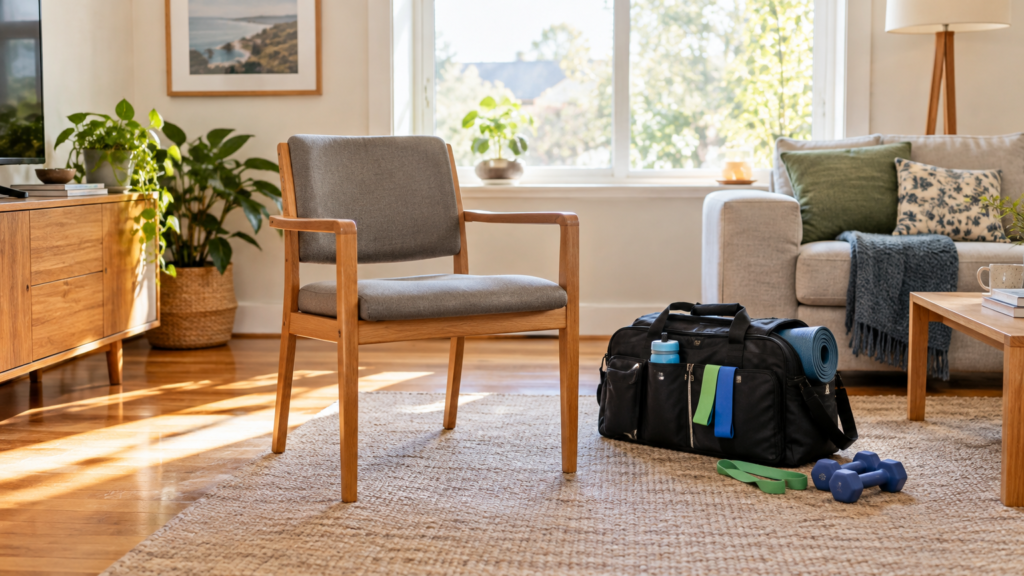
A first mobile exercise physiology session is mostly a conversation. The exercise physiologist will ask about your health, your goals and your daily routines, do some gentle movement checks, and start sketching out a program that fits your home and your life. You do not need any equipment, a big space or a perfect house, just a bit of room to move and a chair.
Here is what to expect, and how to get ready so the session starts well.
What actually happens in the first session
Most of the first visit is about understanding you. Expect questions about your health history, any medicines you take, what a typical day looks like and what you want to be able to do. If you have reports from a GP, specialist or other therapists, having them handy helps, but it is not essential.
Then the exercise physiologist will usually do some simple movement checks. This might be standing up from a chair, walking a few metres, or testing balance and strength in a safe way. Nothing painful, nothing rushed. If something does not feel right, say so and it stops.
By the end, they will talk through what a program might look like and answer your questions. The actual exercise program usually builds over the following sessions rather than being delivered all at once on day one.
What should I wear?
Comfortable clothes you can move in are all that is needed. Think of what you would wear for a walk: shorts or trackpants, a t-shirt, and shoes that stay on your feet securely. If you usually wear supportive footwear, wear it, because the exercise physiologist will want to see how you move as you normally would.
Avoid tight jeans, dresses that ride up, or slippery socks on floorboards. If you would rather not be watched doing certain movements, mention it when you book. Sessions happen in your space, so you set the tone.
How much space do I need?
Less than most people expect. A cleared area about the size of two yoga mats, plus a sturdy chair without wheels, covers most first-session checks. A lounge room with the coffee table shifted back usually does the job.
If the weather is good and you have a flat backyard, patio or nearby park, the exercise physiologist might suggest using it for walking or balance work. Some sessions also happen out in the community, like at a local pool, gym or park, if that suits your goals better. Just mention any access issues, like steps at the front door, when you book so the visit is planned properly.
What should I have ready?
A little preparation goes a long way. Before the visit, it helps to have:
- A list of your current medicines, and any conditions or recent hospital stays
- Any reports or letters from your GP, specialists or other therapists
- Your NDIS plan goals, or a rough idea of what you are working towards
- Two or three everyday things you find hard and would like to change
- Questions written down, because it is easy to forget them on the day
If someone else will be home during the session, that is fine and often helpful, especially for remembering details. Support coordinators can also join by phone if that makes things easier.
Do I need equipment at home?
No. A good exercise physiologist builds programs around what you already have. Chairs, steps, walls, water bottles and resistance bands do a lot of work. If a piece of equipment would genuinely help later, they will talk it through with you first rather than turning up with a truckload of gear.
For telehealth sessions, the same idea applies. You need a device with a camera, enough space for the exercise physiologist to see you clearly, and somewhere to prop the device so both hands are free. Our exercise physiology service is delivered by mobile visit or telehealth, so there is no clinic to travel to.
What if I am nervous about exercising?
That is common, and worth saying out loud at the start of the session. Exercise physiologists work with people at every level of ability and confidence, and the first session is designed to be gentle. You will not be pushed into anything that feels unsafe.
It also helps to remember that the first session is not a test. Nobody is grading you. The goal is to understand where you are starting from so the program fits.
What happens after the first visit?
You should come away with a clear picture of the plan: what the sessions will involve, how often, and what you might do between visits. Progress looks different for everyone and depends on goals and consistency, so be wary of anyone promising quick results.
If you are weighing up which discipline suits you, our guide to exercise physiology vs physiotherapy explains how the two professions differ. And if your goals are more about daily living skills than movement, occupational therapy or speech pathology might be a better starting point.
One note on funding: plans and needs differ, and Progressive is not a registered NDIS provider, so it is worth checking with your plan manager or support coordinator how sessions would be paid for under your arrangement before booking.
If you are ready to book a first mobile exercise physiology session, or you have questions about how it would work in your home, call us on 0410 268 144 or email admin@progressiverespite.com.au.